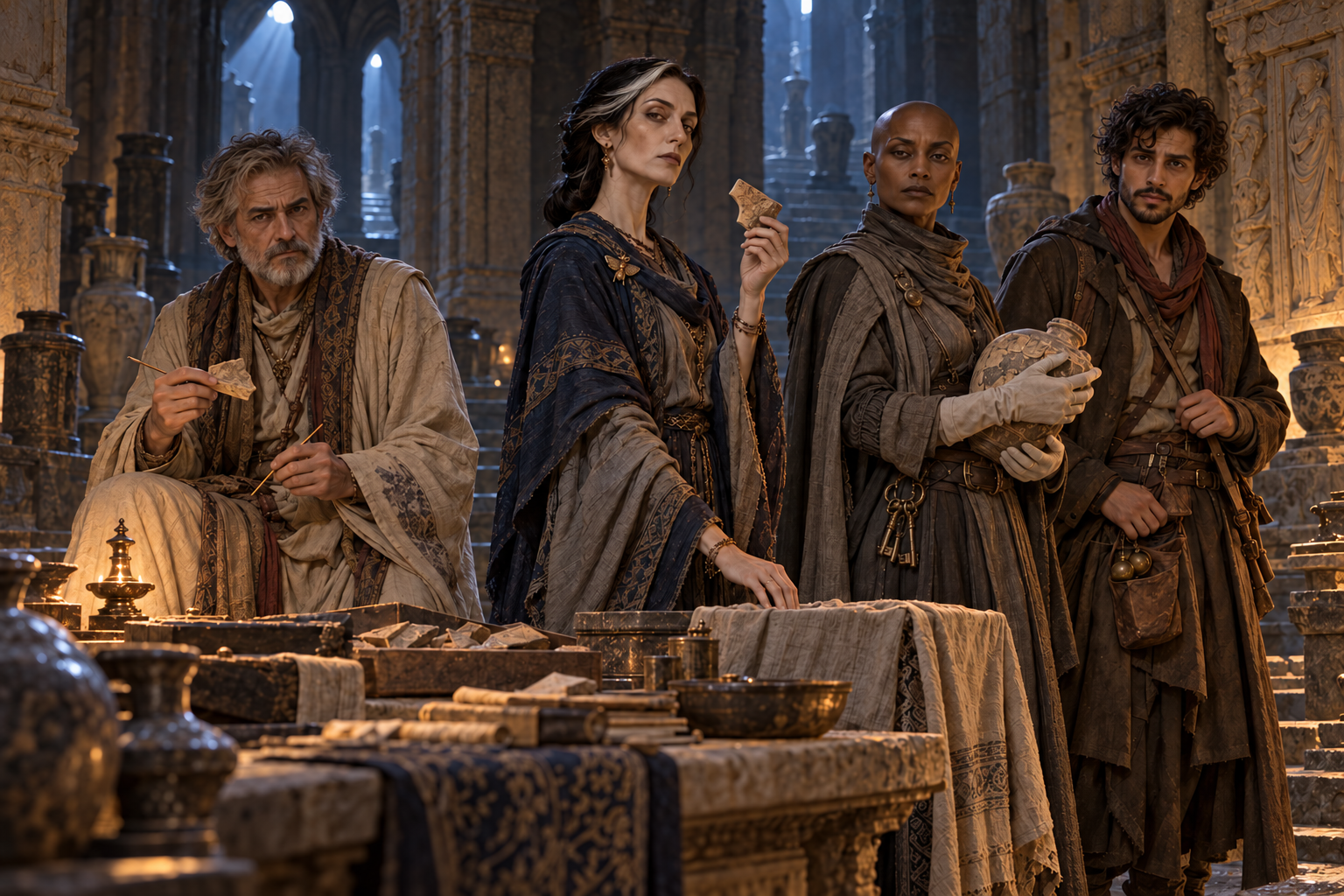
Character, holdings, and sigil
Belrath spends old wealth on the arts, sciences, research, and expeditions. A valuable artifact can finance several further journeys. Unlike Morcant's emphasis on guarded lore, Belrath is willing to circulate knowledge and sell finds. It relies on Harrow to reach mortal markets and buyers its own aloof members scarcely know.
The Quiet Sepulcher retains its restored limestone funerary complex, cool galleries, careful labels, shielded lamps, and restricted vaults. The collections can be beautifully conserved while their acquisition or human cost remains troubling.
The octagonal sigil is a pale moth above a broken gold crown, with the maxim “What survives may yet speak.” The broken crown inspires the proposal that this is a fractured or seceded branch of a larger house. The parent lineage and cause of the split remain open.
Belrath Members
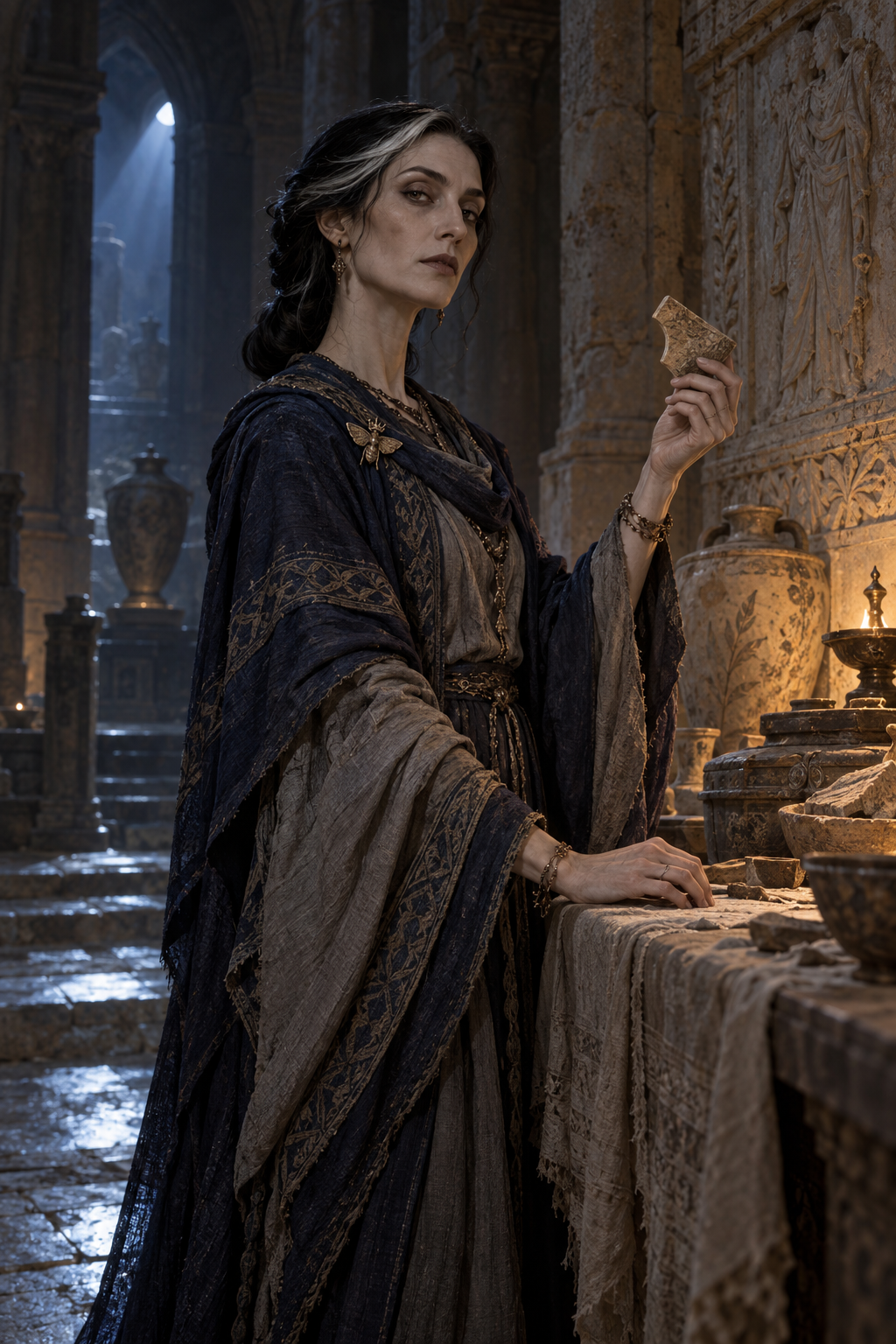
Lady Lenora Belrath — head and patron
Soft-spoken, ancient in manner, and assured of her superiority, Lenora funds what she finds intellectually or culturally valuable. She can patiently teach an expert and dismiss the suffering of dependents as beneath the main question. She values reliable explanations; research into vampiric transformation is Morcant’s specialty. She and Seraphine Vael personally compete and dislike one another; their houses can still cooperate. Her collection is both a scholarly achievement and a source of leverage.
Lenora is a slender woman appearing in her late forties, with cool light-brown skin, a long narrow face, and dark eyes. A prominent silver streak crosses her gathered black hair. Indigo and ash-gray scholar’s robes, a moth clasp, and carefully poised hands reinforce her quiet concentration.
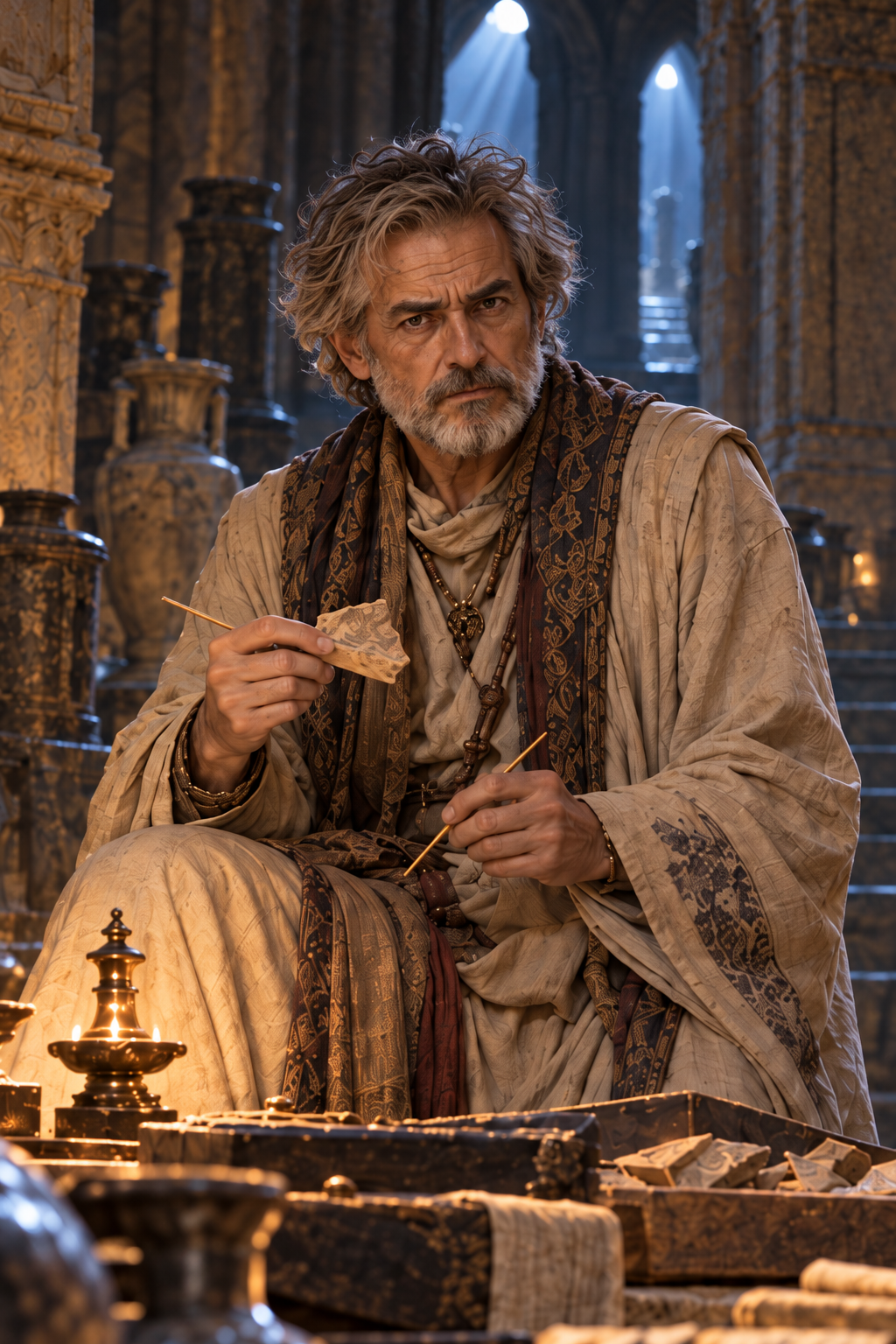
Professor Ambrose Quill — epigrapher and expedition contact
Quill is a demanding scholar who hates forgery and wants discoveries documented rather than casually destroyed. Belrath funds work few mortal patrons can support. His old friendship with Edmund Graves creates the party's introduction, and he hires it to clear or open the dwarven site. Unease over coerced labor and careless acquisition remains compatible background; he need not approve every household practice merely because he accepts its patronage. The exact promises he makes about recovered objects should be set before the expedition.
Ambrose is a man appearing in his sixties, with an olive complexion, shaggy gray hair, and a short gray beard. Ink-stained sand-colored robes hang loosely around him. A pottery fragment and reed pen often occupy his hands as he studies objects with visible skepticism.
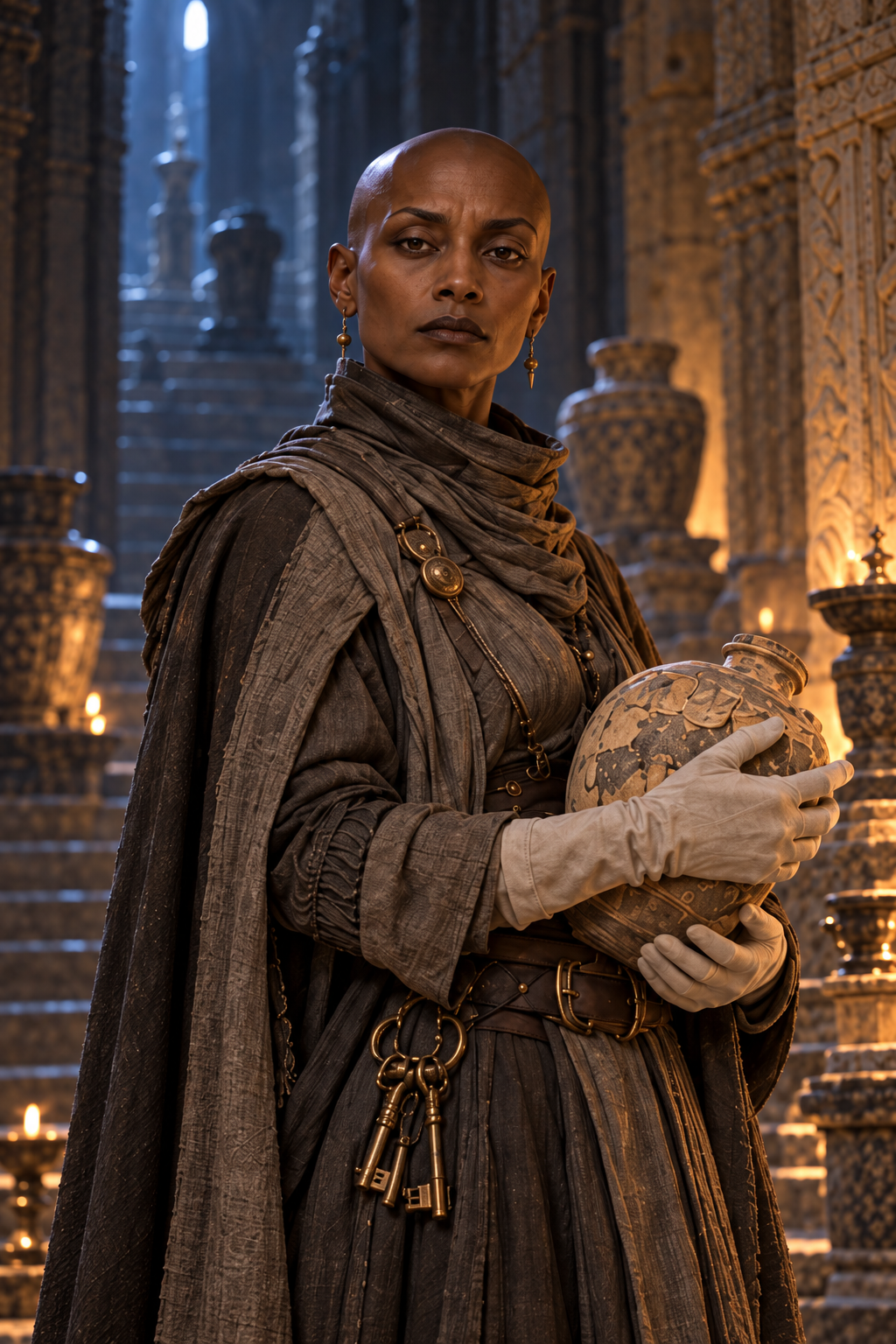
Dame Zorina Belrath — conservator
Zorina manages fragile objects, dangerous holdings, and the house's private burials. Loyal to Lenora, she nevertheless thinks some discoveries should remain sealed. Her separate inventory of items officially described as lost remains an optional internal secret. This puts her judgment in tension with Belrath's willingness to circulate discoveries without automatically aligning her with Drazek. A funerary inscription in her care is a possible research lead; its connection to vampire origins remains unresolved.
Zorina is an adult woman with deep brown skin, a shaved head, and a guarded, assessing gaze. Iron-gray layered linen, padded conservation gloves, and an old key ring give her a spare, practical silhouette. She handles fragile objects with deliberate care.

Faris Reed — expedition broker
Charming, frequently short of funds, and talented at finding guides, Faris negotiates recovery rights and sometimes promises more than he can deliver. His proposed intimate circle includes Vera Drazek, Corvin Koss, and Master Peregrine Harrow. He tells Vera that Quill has hired the party to clear the dwarven temple. That disclosure leads to her request for a find. His motives and what Lenora knows are not established; do not assume the disclosure proves an organized betrayal. His knowledge of missing expedition accounts offers another possible lead.
Faris is a man appearing in his thirties, with light-brown skin, wavy dark hair, and a short trimmed beard. His dust-marked travel coat carries small pouches and trade equipment; an easy half-smile and restless attention make his charm seem slightly strained.
Apparent ages do not establish the vampires' chronological ages.
Historical background
Belrath recovered damaged archives after the Cistern Siege, returning some records and retaining others for conservation. The resulting ownership disputes can persist without making Morcant a permanent enemy. The Compact provides political protection for employed scholars and guides, with actual compliance depending on interests and collective pressure.
Lenora's investigations may touch the belief that former Pharaohs received a cruel version of eternal life. Conflicting inscriptions and uncertain provenance leave that belief unconfirmed. No cure, universal vampire weakness, or creation method follows from the collection.
Attitude toward mortals
Belrath's defining stance is that ordinary humans are largely irrelevant beside its own long perspective. Proposed captive-feeding arrangement: mortals are kept as captives for nourishment. The details of procurement and confinement remain undeveloped. A valued mortal scholar can enjoy freedom and privileges while other mortals are treated as resources.
Secrets and internal tensions
- Captive dependents: Feeding on confined mortals fits Lenora's instrumental attitude and creates a clear moral friction with Harrow's consent-based dealings.
- Faris's disclosure: Vera knows of Quill's commission through him and will seek an object for Drazek, creating a competing claim within the expedition.
- Possible split: The broken-crown origin remains a proposal; its parent house, age, and ancestral claims are not finalized.
- Other discoveries: Lenora refused to authenticate Malrec's supposed royal relic because its inscription was added later. That challenges the object's provenance, not his ancestry. A plan showing a sealed chamber beneath Ravenhollow can supply a future request, but no existing access dispute need prevent inter-house cooperation.
- Optional hidden records: Zorina's separate inventory and Faris's coerced-labor receipts can expose contradictions in the house's respectable image. Belrath does not need to publicly condemn every practice it secretly uses for these records to be damaging.
How Belrath views the other houses
- Vael: Institutionally compatible despite Lenora and Seraphine's personal rivalry. Quill and Edmund keep a useful channel open.
- Koss: Brutes it can afford to hire when useful. Contempt and paid cooperation can coexist.
- Morcant: A generally friendly partner in knowledge exchange. Belrath pays its debts and recognizes the value of archives without sharing Morcant's every priority.
- Harrow: Essential access to mortal markets, introductions, and buyers. Commercial reliance survives differences in ethics and social standing.
- Drazek: Guardians who keep discoveries from circulation. Their competing views create the expedition dispute, complicated by Vera and Faris's private connection.
How other houses view Belrath
- Vael: The houses can cooperate. Seraphine and Lenora compete and dislike one another; Edmund and Quill work around that friction.
- Koss: A potential employer despite contempt between its scholars and Koss's soldiers. Mutual dislike does not rule out paid service.
- Morcant: A generally friendly partner in knowledge exchange that pays its debts. Access and provenance can still be negotiated without a standing feud.
- Harrow: An important source of artifacts and a customer for mortal market access. Harrow can facilitate legitimate sales without endorsing its patron's treatment of captives.
- Drazek: A source of dangerous circulation: scholars and patrons who recover, sell, or publish things Drazek would contain. Vera and Faris nevertheless have a personal channel.
Current adventure connection
Edmund introduces Quill; Quill commissions the party to investigate and clear the sealed dwarven ruin, where incomplete records suggest an artifact. Faris tells Vera, who approaches the party on the way or inside and asks for the important find to go to Drazek. The object and the exact commission terms remain to be defined. Its identity is not automatically Drazek's elder-god artifact.